
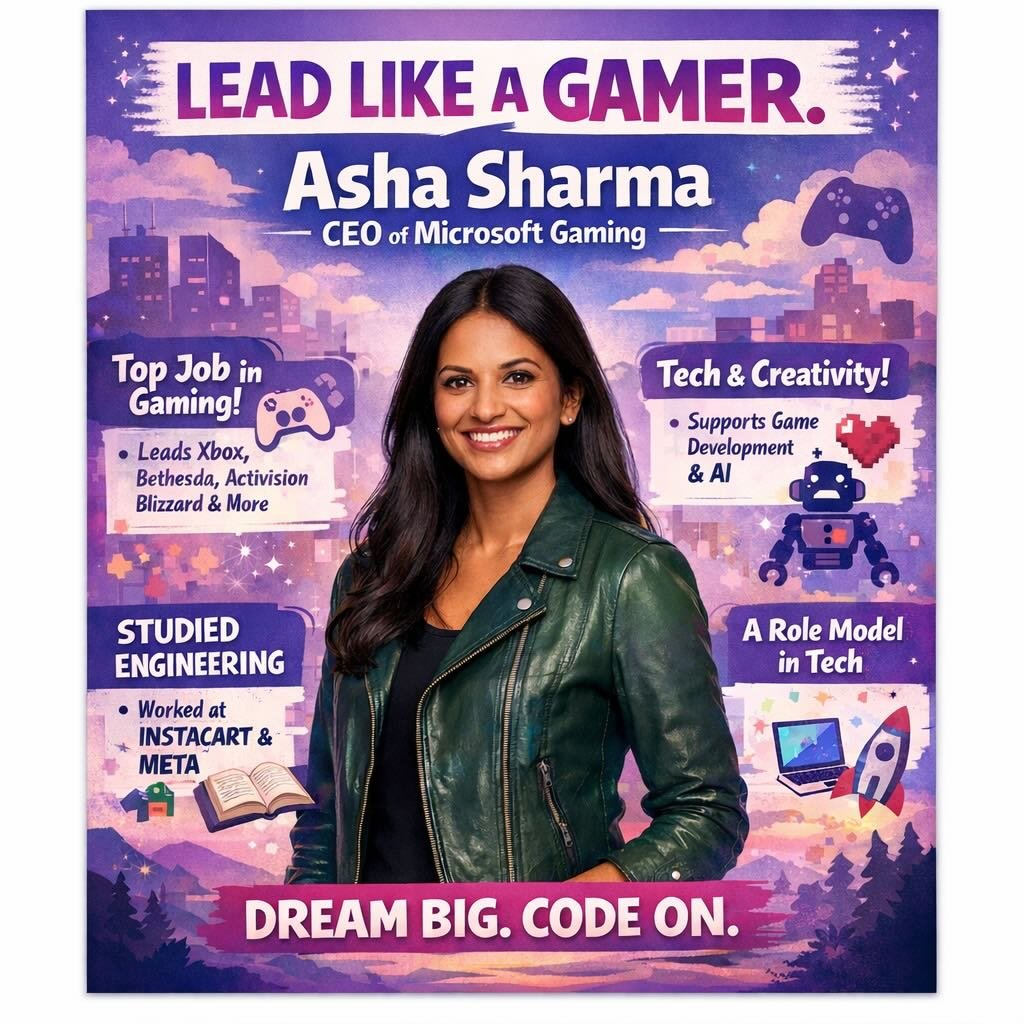
Microsoft has appointed Asha Sharma as Executive Vice President and CEO of Microsoft Gaming, reporting directly to Satya Nadella as Xbox approaches its 25th anniversary.
It is a major leadership transition for one of the world’s largest creative technology platforms, and an important moment for representation within computing and game development.
Microsoft Gaming now spans Xbox hardware, PC platforms, cloud gaming services, and nearly forty studios across Xbox Game Studios, Bethesda, Activision Blizzard, and King. Together, these reach more than 500 million monthly active users worldwide.
Leadership at this scale influences not only entertainment, but also the technologies and career pathways students increasingly encounter in computing education.
A Different Route Into Technology Leadership
Sharma’s background differs from many traditional gaming executives.
Before joining Microsoft, she served as Chief Operating Officer at Instacart and previously held senior leadership roles at Meta, helping scale large consumer platforms used by billions of people globally.
Rather than emerging from a single studio or franchise career path, her experience centres on building large digital ecosystems that connect developers, creators, and communities.
That reflects how gaming itself has evolved.
Modern games now operate across console, PC, mobile, and cloud environments. Subscription services, creator marketplaces, and live online communities increasingly define success alongside creative design.
For students learning computing today, this mirrors the wider industry shift toward platform thinking and collaborative development.
A Visible Role Model in Computing
Senior leadership roles across technology and gaming remain unevenly represented.
Appointments like this matter simply because they expand the range of examples students can see when imagining careers in computing.
For teachers encouraging participation in programming, artificial intelligence, or digital creativity, visible leadership examples help demonstrate that there is no single pathway into technology leadership.
Sharma’s career combines operations, product design, and ecosystem strategy rather than a traditional engineering route. It reflects the growing importance of communication, collaboration, and large scale systems thinking within modern computing careers.
What Sharma Intends to Do
In her first message to Microsoft Gaming employees, Sharma outlined three priorities.
The first is a focus on great games.
She emphasised empowering studios, investing in iconic franchises, and supporting creative risk taking. Matt Booty’s promotion to Executive Vice President and Chief Content Officer reinforces a continued emphasis on development talent and creative leadership.
The second priority is what she described as a renewed commitment to Xbox.
Despite expansion into cloud gaming and cross platform publishing, Sharma signalled stronger attention toward console players and long term fans. Rather than replacing hardware, Microsoft appears focused on building a seamless experience across console, PC, mobile, and cloud platforms.
The third priority looks toward the future of play.
Artificial intelligence featured prominently in her message, but with clear caution. Sharma stressed that AI should empower creators rather than replace them, warning against filling gaming ecosystems with automated content lacking human craft.
For educators currently navigating AI use in classrooms, this reflects a growing industry conversation about balancing innovation with creativity.
Why Educators Should Pay Attention
Game engines, cloud platforms, and AI development tools increasingly overlap with education technology.
Students now learn programming using tools similar to those used in professional studios. Cross device publishing and AI assisted workflows are already shaping how young creators prototype ideas and share their work.
Leadership decisions within companies like Microsoft often influence these tools and ecosystems over time.
Sharma’s emphasis on creativity, accessibility, and human led innovation suggests gaming will continue moving toward a broader creator platform model.
For schools preparing students for future computing careers, that direction is worth watching.
