
AI is already part of classroom life, teacher workflows, and student habits. Across discussions at the Cambridge University SEAP conference, one message came through clearly: the question is no longer whether AI should be used in schools, but how well we guide its use.
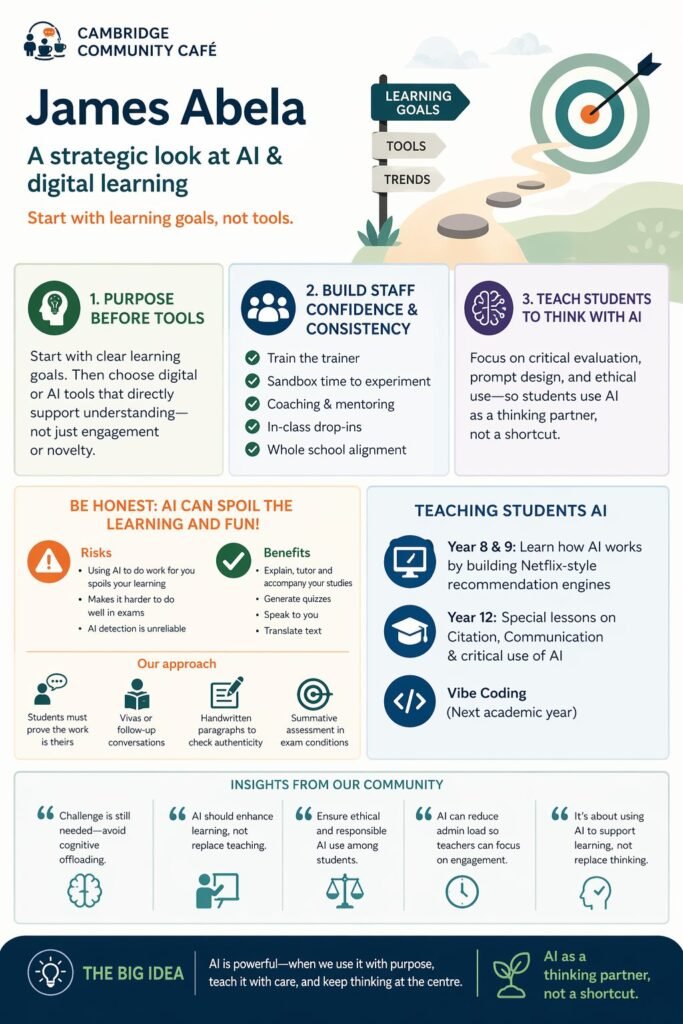
Teachers recognised that AI can save time, support planning, personalise learning, generate resources, and help with feedback. At the same time, there were clear concerns about over-reliance, plagiarism, inaccurate outputs, hallucinations, and students using AI to avoid doing the thinking themselves.
The challenge for schools is to move beyond simple acceptance or rejection. AI works best when it supports thinking rather than replaces it.
AI as a teaching assistant, not a replacement
One of the strongest opportunities identified was teacher productivity. Teachers are already using AI for lesson planning, worksheets, quizzes, lesson summaries, notes, emails, reports, and project ideas. There was also strong interest in tools that reduce repetitive workload and streamline preparation.
This matters because time saved on routine tasks can be redirected towards better student support. However, AI-generated material still needs teacher judgement. A worksheet, quiz, or explanation may look polished, but it may not match the class, the curriculum, or the level of challenge required.
The useful mindset is not “AI will do this for me”, but “AI will help me create a better first draft that I can improve”.


Prompting is now a professional skill
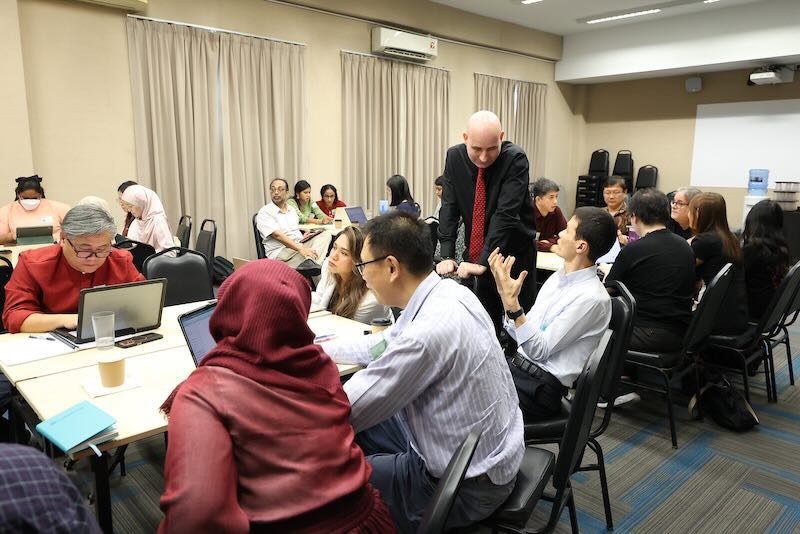
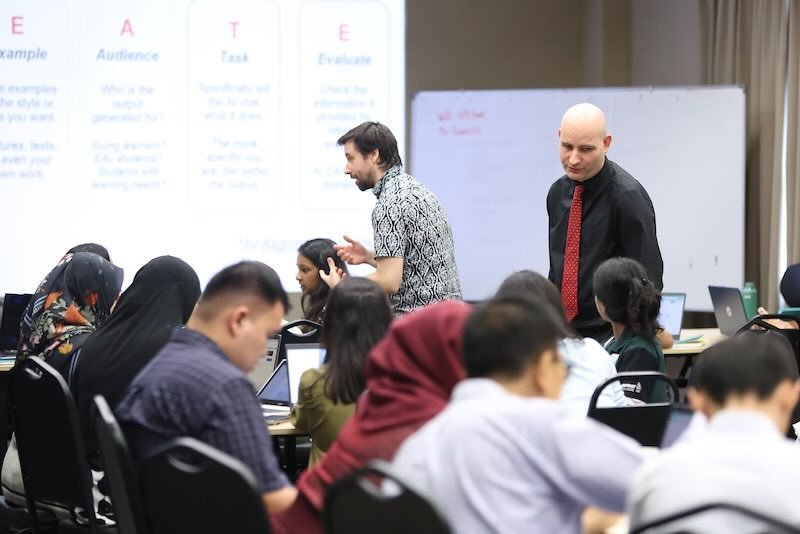
A repeated practical takeaway was that prompts need to be specific. General prompts produce general answers. Better prompts give the AI a role, a task, a target audience, a topic, and a clear structure.
One useful framework is to define:
- who the AI should act as
- what it should do
- who the output is for
- what the content is about
- how the response should be structured
For example, instead of asking for a generic lesson, a stronger prompt specifies the subject, level, learning model, and expected outputs. This gives teachers more control and makes AI a structured thinking partner rather than a black box.
Accuracy still needs human checking
A consistent concern was accuracy. AI can produce confident but incorrect explanations, misleading diagrams, or answers that appear convincing but are flawed.
A simple but effective approach is to treat AI output as a starting point, not a final answer. Teachers and students should verify information, check sources, and compare responses with trusted materials.
A useful rule for the classroom is:
AI can suggest. Humans must verify.
Teaching students to use AI responsibly
There was a strong concern that students may use AI as a shortcut. Without guidance, students can become dependent on instant answers rather than attempting tasks themselves or learning from mistakes.
This makes AI literacy essential. Students need to understand not just how to use AI, but when and why to use it.
Clear guidance can help:
- try first, then use AI to check or improve
- ask AI to explain, not just answer
- compare AI output with other sources
- do not submit AI work as your own
- be ready to explain your thinking
This keeps the focus on learning rather than output.
Assessment needs to adapt
Assessment remains one of the most challenging areas. Detecting AI use is unreliable, and many teachers rely on professional judgement when student work does not match their usual understanding.
A sensible approach is to separate how AI is used in learning from how understanding is assessed. AI can support practice, revision, and feedback, but summative assessment may still need controlled conditions.
There is also a growing need to focus on process. Draft work, verbal explanation, and reflection can help demonstrate genuine understanding beyond a final written answer.
Schools need shared direction
Teachers consistently highlighted the need for support. There is strong demand for clear policies, training, shared examples, and subject-specific approaches.
A practical starting point for schools could include:
- simple principles for responsible AI use
- shared prompt examples across subjects
- a bank of classroom use cases
- practical staff training
- a structured approach to teaching AI literacy
- review of assessment design
This allows schools to move forward without requiring every teacher to become an expert immediately.
The bigger shift
Perhaps the most encouraging insight was not that teachers had all the answers, but that they were asking the right questions.
- How do we keep students thinking?
- How do we maintain academic honesty?
- How do we use AI to support learning rather than replace it?
- How do we prepare students for a world where AI is normal?
AI is reshaping how students access knowledge, how teachers design learning, and how schools approach assessment. The goal is not to make learning easier in a superficial sense, but to make it more thoughtful, better supported, and more meaningful.
